
From One Needle Insertion to Three Tissue Samples: Four Founders Aim to Make Diagnostics Safer
A real-world challenge in a hospital became the starting point for MultiBiopsy. Today, four founders are developing a biopsy device capable of collecting up to three tissue samples through a single needle insertion. Their goal is to reduce the need for repeated insertions and improve the chances of obtaining enough tissue for an accurate diagnosis.

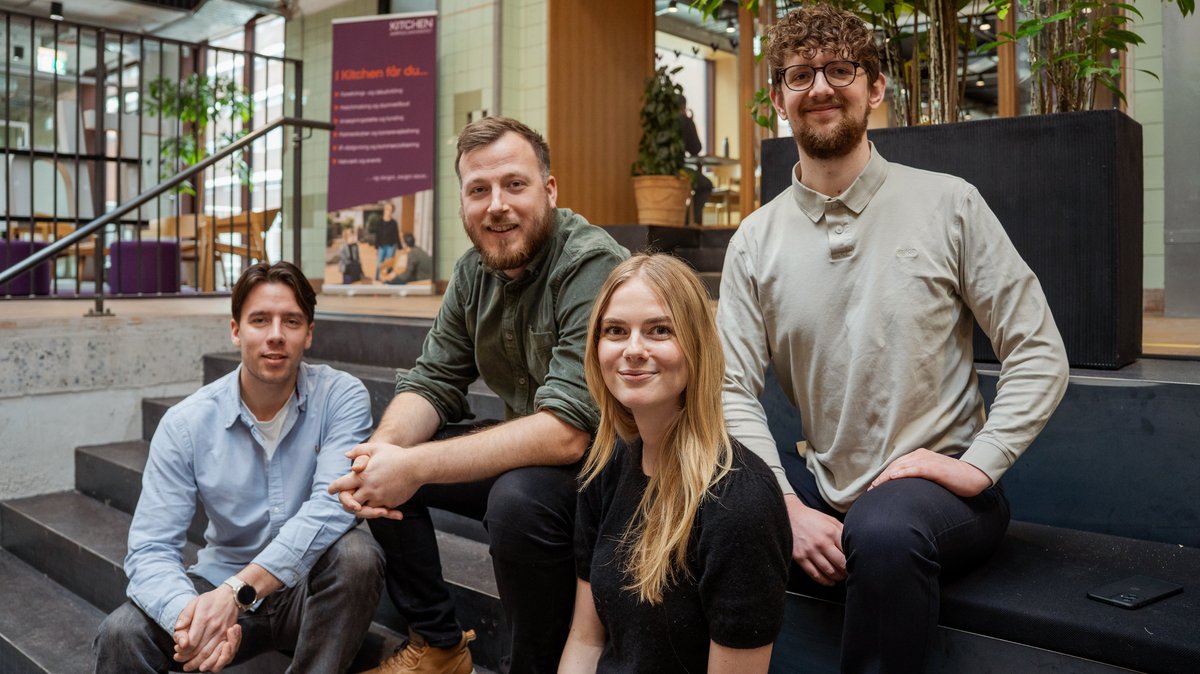
MultiBiopsy Aps was founded by four entrepreneurs with different professional backgrounds:
- William Ludvigsen, Co-founder & CEO, holds a degree in Process and Innovation Engineering from the Technical University of Denmark (DTU).
- Kristian Horsager, Co-founder & CSO, is a medical doctor affiliated with Aarhus University Hospital and is training to become a specialist in radiology.
- Caroline Ejlskov Jensen, Co-founder & CTO, is studying Biomedical Engineering at the Department of Electrical and Computer Engineering, Aarhus University.
- Anton Meldgaard Esbjerg, Co-founder & COO, holds a degree in Biomedical Engineering from Aarhus University.
How did you come up with the idea for MultiBiopsy?
The idea emerged from a specific clinical need that Kristian encountered during his radiology training. When collecting tissue samples, several needle insertions may be necessary to obtain sufficient material for diagnostic analyses. However, each insertion carries a risk of complications. William later joined the project and, as part of his bachelor's project at DTU, investigated whether the need extended beyond that particular clinical situation. It turned out that it did. Since then, the team has explored and validated the problem across 21 hospitals in five countries. What began as an observation in a clinical setting turned out to be a challenge experienced by clinicians on a much broader scale.
What has been your biggest breakthrough so far?
Our biggest breakthrough has been achieving proof of concept for the biopsy needle. In tests, we have demonstrated that it is possible to collect three tissue samples through a single needle insertion while achieving sample quality comparable to or better than the existing products we tested against. This was an important milestone because, for the first time, we were able to demonstrate that the fundamental idea behind MultiBiopsy works not only on paper but also in practice.
What is your biggest challenge right now?
Caroline: One of our biggest challenges is that we are developing a physical medical device. Hardware development requires both time and capital. You cannot build a new prototype overnight or test a modification by changing a few lines of code. We also operate in a highly specialised field, which can make it difficult to find suppliers and partners with the right technical expertise and an understanding of the requirements for developing medical devices.
Anton: My biggest challenge is juggling many different tasks and constantly having to switch focus.
William: It's the classic startup challenge: finding the right balance between planning and structure in a constantly changing and unpredictable environment. We need a clear direction and the ability to prioritise our tasks. At the same time, we must remain flexible enough to change course quickly when we gain new insights or encounter unexpected challenges.
Kristian: For me, it's about balancing our financial constraints with the ambition to keep moving forward. We have limited resources and constantly need to prioritise carefully without compromising on quality or the pace of development.
What is the best advice you have received about entrepreneurship?
Caroline: Entrepreneurship takes courage, time and optimism – but above all, a great team. There will be ups and downs, and when things get tough, it makes a huge difference to have people around you who can help lift each other up. Another valuable piece of advice is to trust your instincts. As a startup, you receive a lot of advice from talented and experienced people, and sometimes that advice points in completely different directions.
You need to listen and learn, but ultimately you also have to trust your own judgement about which direction makes sense.
And don't be afraid to ask for help. If you don't tell people what you need, they won't know how to help you.
Anton: Do it while you have the time, and make sure your personal finances can potentially cover a month or two without a salary.
William: The team is everything.
Many people believe that the idea is the most important thing, but my experience is that the team is what really matters.
With the right team, you can also find the right idea, the right solution, the right network and the capital you need.
Kristian: Get out early and talk to the people who will actually use your solution.
A good idea only becomes valuable when it solves a real problem,
and you have to be willing to let feedback challenge both your product and your own assumptions.
Which decision has had the biggest impact on your entrepreneurial journey – for better or worse?
Caroline: The decision to bring an investor on board. When you build a company from scratch, it quickly starts to feel a bit like your own child. You have invested an enormous amount of time and energy in it, so giving up a share of it can be difficult. At the same time, we knew that we needed to make room for others to give the company the best opportunities to grow. So it wasn't just about securing capital. It was about finding the right investor – someone who could also contribute experience, knowledge and a valuable network. It has been an important realisation that sometimes you have to let go of a little to create room for growth.
Anton: Choosing the right co-founders. One of the most important things is that we get along well on a personal level. It makes it easier to handle and resolve the conflicts that naturally arise.
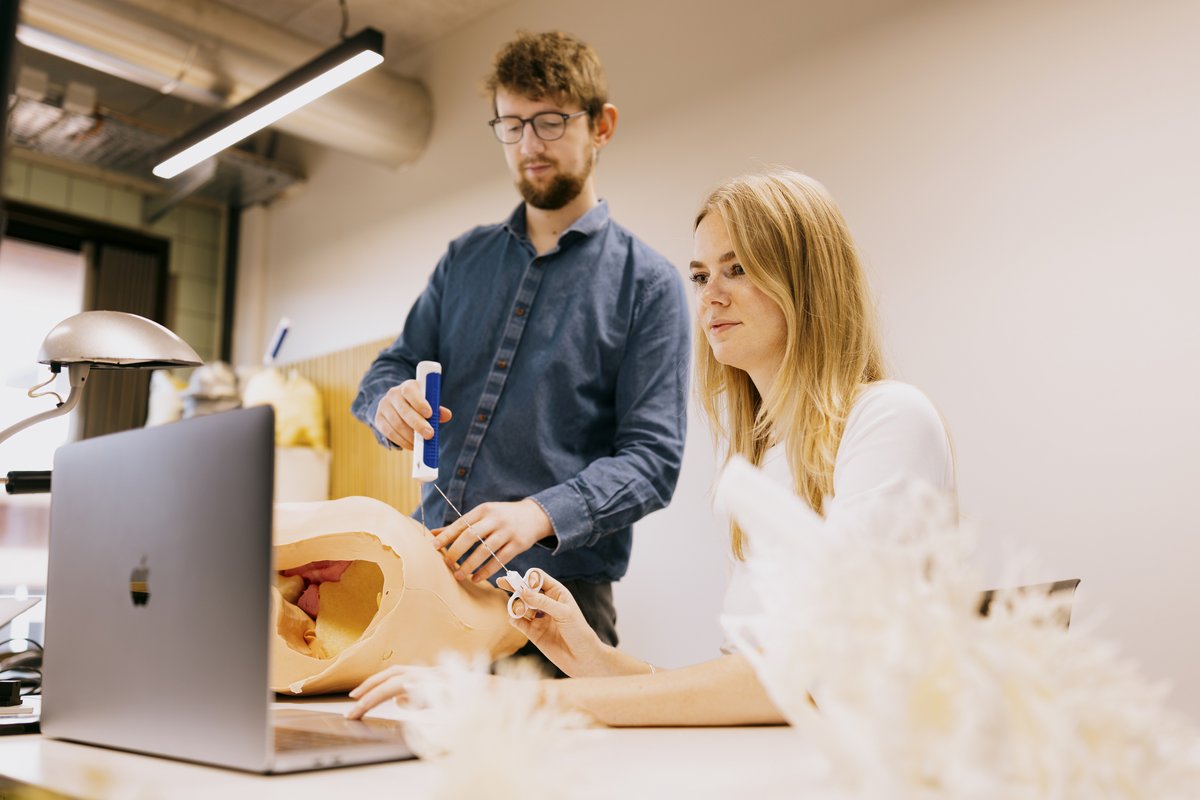
William: The decision to develop two projects in parallel. In addition to the biopsy device, we have developed a training mannequin for doctors practising lung biopsies. We have already sold our first training mannequin, which has been a particularly exciting and educational experience. At the same time, it has shown us that developing two projects simultaneously is not sustainable in the long run. It requires roughly twice as much planning and resources, while our time has to be divided between the two.
Kristian: The decision to turn the idea into a company and take responsibility for moving it forward ourselves. It has required difficult prioritisation and an acceptance of uncertainty, but it has also been essential in moving the technology beyond the idea stage.
What did you consider before taking the leap into entrepreneurship?
Caroline: I had a lot to think about. Would I have enough time? Could I make it work financially alongside my personal life? And could I thrive in an environment where so much is unpredictable and you rarely know exactly what lies ahead? But the most important question was whether what we were developing could create real value for other people. That makes it easier to accept the uncertainty and the many hours of work. We are working on something that could potentially make a real difference for both clinicians and patients, and that is a powerful motivation.
Anton: It was a good time in my life to do it. As a student, balancing my studies and a startup was challenging, but at the same time, it was a relatively low-risk stage of life to venture into entrepreneurship.
William: I spent a lot of time considering whether I should gain experience in industry before starting my own business.
But when is the best time to start? The answer is almost always: Yesterday – in other words, right now.
There is probably nothing that can fully prepare you for life in a startup. Everything is new, and at the same time, it is one of the most educational experiences you can have.
Kristian: For me, the key questions were whether the problem was significant enough, whether our solution could make a real difference for patients, and whether we had the right team. Only when we could see both a clear clinical need and a realistic path forward did it make sense to commit to the project.
What does entrepreneurship offer you that a more traditional job might not?
Caroline: The opportunity to work across an incredible range of disciplines at the same time. Of course, we use our educational backgrounds and technical skills to develop the product, but we also work on everything from running the business to investors, funding, patents and regulatory processes. One day, we might be figuring out how to design a specific component. The next, we might be dealing with patents, medical device approval in the US or financing the next stage of development. And perhaps most importantly, we get the opportunity to create something entirely from scratch that we believe can make a real difference in people's lives.
Anton: You gain incredibly broad experience and learn to handle many different tasks. It gives you a wide range of skills to draw on later in your career.
William: An enormous amount of learning, experience and opportunities that I cannot imagine gaining anywhere else. You learn a lot about yourself and develop a comprehensive understanding of what it takes to turn an innovation into a successful business. And the experiences themselves are priceless. Building something of your own alongside a team that shares the same passion makes the entire journey unique.
Kristian: The opportunity to follow an idea all the way from a clinical problem to a solution that could potentially be used in hospitals. The combination of medicine, technology and business creates a unique sense of responsibility, momentum and tangible progress.
What do you wish you had known when you started?
Caroline: I don't think there is anything in particular I wish I had known beforehand.
William: Nothing more than I already knew. Strangely enough, not knowing much about what the project would require actually made it easier to get started.
Kristian: That developing the product itself is only one part of the journey. Regulation, financing, patents, partnerships and building the right team take up just as much time and effort – and almost everything takes longer than you initially expect.